

fter a crash between two cars, the question of who is responsible usually has a short answer. One driver ran a light, followed too closely or drifted out of their lane. Commercial truck crashes rarely work that way. A single truck on the highway may be connected to half a dozen different businesses, and any of them could have played a part in what went wrong. Understanding those connections is the first step toward understanding how responsibility gets sorted out.
Who Can Be Held Responsible After a Commercial Truck Crash?
20 de noviembre 2025 · 06:32hs
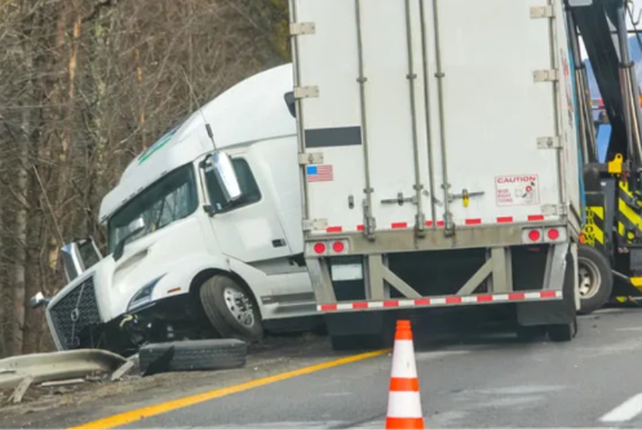
Why Truck Crashes Involve So Many Players
Freight moves through a chain. Someone owns the goods. Someone packs and loads them. Someone arranges the shipment. Someone owns the truck, someone owns the trailer, someone maintains them, and someone drives. Sometimes one company handles several of these jobs. Often, different companies handle each one. When a crash happens, every link in that chain is worth examining.
This matters for a practical reason, too. Each business may carry its own insurance. Identifying everyone who contributed to a crash can affect what resources are available to an injured person and their family.
The Truck Driver
The driver is the most obvious place to start. Common driver errors include speeding, distracted driving, following too closely, unsafe lane changes and driving while fatigued or impaired.
Federal rules set limits that help investigators measure a driver's conduct. Property-carrying drivers may drive up to 11 hours after 10 consecutive hours off duty, within a 14-hour window, and they must take a 30-minute break after 8 cumulative hours of driving. Electronic logging devices (ELDs) record driving time, so investigators can check whether those limits were respected. CDL drivers are also subject to drug and alcohol testing, and test results can become relevant after a crash.
Even when the driver clearly made a mistake, the inquiry usually does not stop there.
The Motor Carrier
The motor carrier is the trucking company that operates the truck. In many situations, a carrier can be held responsible for the actions of a driver who was working for it at the time of the crash. But carriers can also be responsible for their own decisions, separate from anything the driver did.
Questions about a carrier often include:
- Hiring. Did the company check the driver's record and qualifications before putting them on the road? Carriers must keep driver qualification files.
- Training and supervision. Was the driver properly trained for the vehicle and cargo? Did the company act on warning signs?
- Scheduling. Were delivery schedules realistic, or did they push drivers to skip rest or speed?
- Maintenance. Carriers must keep maintenance records. Were inspections done and problems fixed?
The FMCSA regulates interstate carriers, so a carrier's safety history and compliance record can also shed light on how it operates.
Owner-Operators and Leased Equipment
Some drivers own their own trucks and lease themselves to a carrier. Others drive a truck owned by one company while pulling a trailer owned by another. These arrangements can complicate the question of who is responsible, and contracts between the parties often need to be reviewed carefully.
The Freight Broker
Freight brokers act as middlemen. They connect shippers who need goods moved with carriers who have trucks available. Brokers do not usually own trucks or employ drivers, but they do choose which carrier gets a load.
That choice can matter. If a broker picks a carrier with an obviously poor safety record, missing authority or a pattern of violations, questions may arise about whether the broker acted reasonably. The law around broker responsibility is still developing and can depend on where the case is filed, so this area often requires careful legal analysis.
The Shipper and the Loader
How cargo is packed and secured has a direct effect on how a truck handles. An overloaded trailer is harder to stop. A load that is unevenly distributed can make a truck unstable on curves. Cargo that is not properly tied down can shift, causing a rollover, or fall off entirely and strike other vehicles.
In some cases, the driver or carrier loads the truck. In others, the shipper or a separate loading company does it, and the driver may not even be allowed to inspect the sealed trailer. When loading errors contribute to a crash, the party that loaded the cargo may share responsibility. Bills of lading and other shipping documents can help show who handled the freight.
The Maintenance Company
Trucks need constant upkeep. Brakes, tires, lights, steering and coupling devices all wear down with use. Many carriers handle maintenance in-house, but others send their trucks to outside repair shops.
If a third-party shop performed faulty brake work, missed a worn tire or signed off on an inspection without doing it properly, that shop may be responsible for a crash that followed. Maintenance and inspection records are central here, which is one reason they need to be requested and preserved early.
The Manufacturer
Sometimes the problem is not how a truck was driven or maintained, but how it was built. A defect in the brakes, tires, steering components, coupling devices or other equipment can cause a crash or make injuries worse. The same is true for safety equipment like underride guards. Federal rules require rear underride guards on most trailers, but side guards are not federally required, and the design and strength of guards can become an issue in some cases.
Product defect claims can involve the company that made the vehicle, the maker of a specific part, or others in the distribution chain. These claims often depend on engineering analysis and close inspection of the physical evidence.
Other Possible Parties
Depending on the facts, other parties may also come into the picture. A government agency might be involved if a dangerous road design, missing signage or poor maintenance of the roadway contributed. Another motorist might share fault if they cut off the truck or caused a chain reaction. Claims against government entities often have special notice rules and short deadlines.
How Responsibility Gets Figured Out
Sorting out who is responsible means gathering evidence from many sources. That usually includes the police report, photos and video, witness statements, ELD records, engine data, dispatch communications, the driver's qualification file, maintenance logs, inspection reports and cargo paperwork. Some of this information lives with the trucking company and may be lost if no one asks for it to be preserved.
It also means understanding the federal rules that govern trucking. Many injured people and families work with firms that handle these cases every day. Black Trucking Lawyers, for example, is a Black-led firm that takes only trucking cases and has offices in Atlanta, Cleveland, Cincinnati and Dayton, and it is one resource for people looking for commercial truck accident attorneys familiar with the FMCSA's rules.
Looking at the Whole Chain
When a commercial truck crash changes your life, it is natural to focus on the driver. But the driver is often just one part of a larger system. The carrier, broker, shipper, loader, repair shop and manufacturer can all have a role, and each one may need to be looked at closely. Time matters, since evidence can disappear and filing deadlines vary by state and can be short. This article offers general information, not legal advice, so speak with a licensed attorney about your own circumstances.